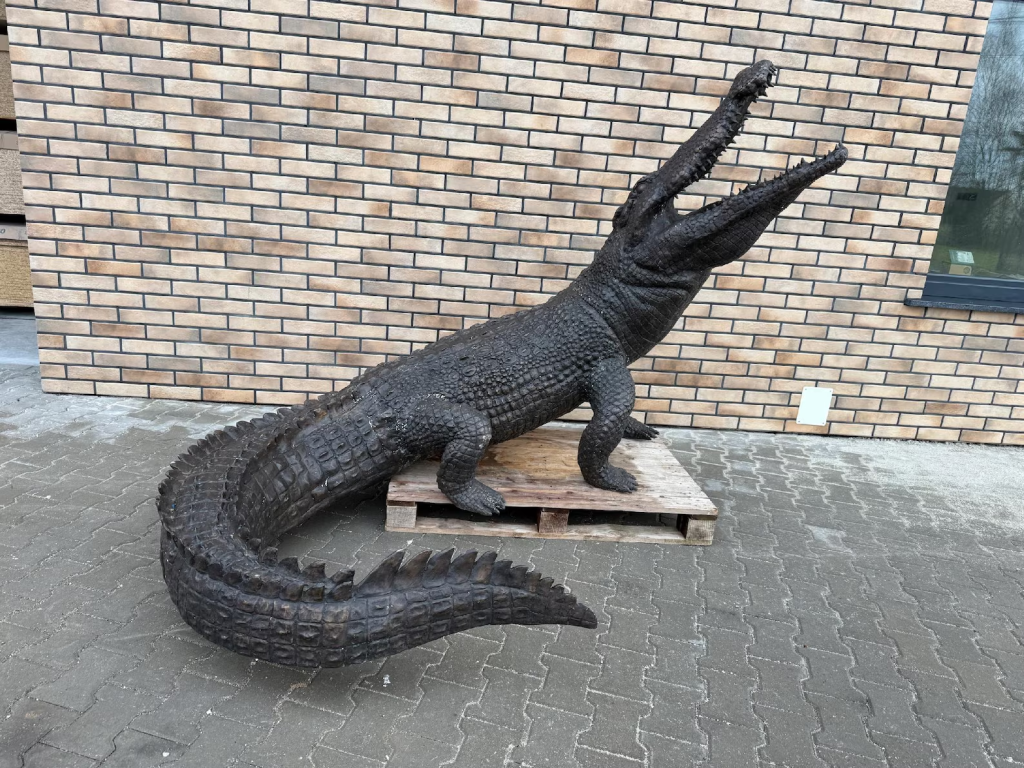
When a visitor first meets a bronze alligator, they feel it before they can explain it: the weight of presence, the crisp authority of form, the sense that nature has been rendered with discipline. We make this piece in bronze so it can stand confidently in a public setting—church grounds, a devotional courtyard, or an entry space where people slow down and look longer.
Craftsmanship and material
Our artisans work in the Italian tradition, shaping the character of the animal with a sculptor’s eye for proportion and movement. The sculpture is cast in bronze, then finished to bring out a warm patina that reads beautifully in both natural and indoor light. The surface treatment is where the piece becomes more than metal: it softens highlights, deepens shadows in the scale work, and gives the whole form a lived-in richness.
Because bronze is inherently durable, this kind of animal sculpture is well suited to spaces that receive steady foot traffic. We still treat finishing and mounting with care—every contour must hold its clarity, and every transition should feel intentional rather than merely decorative.
Religious symbolism and devotional resonance
In a sacred setting, an alligator is not “wildlife décor.” It becomes a symbol of vigilance, endurance, and the boundary between calm surfaces and hidden depth. Placed thoughtfully, the sculpture can support the emotional rhythm of a space: it reminds people that creation is powerful, that life has seasons, and that strength can be steady rather than loud.
We often see animal works like this used to broaden the language of devotion—inviting reflection on God’s creation through form. The lifelike posture and dynamic detailing help the piece feel present and truthful, not abstract. That realism gives visitors something concrete to contemplate as they pass.
Placement and use in a church or devotional setting
Where you place an alligator bronze sculpture determines how it speaks. We recommend considering sightlines first: a piece like this performs best when it can be approached, not just seen from a distance.
-
Entry and threshold moments: Position it near an entrance, side approach, or courtyard path where visitors naturally slow down. The sculpture’s presence becomes a quiet welcome—an emblem of watchful care.
-
Devotional courtyards: Place it where natural light can catch the patina. Morning and late-afternoon light tend to bring out the scale detailing and the depth of the finish.
-
Focal points in gardens: If the space includes greenery, keep enough clearance for the bronze to read clearly against the background. The goal is contrast—nature around it, not nature competing with it.
-
Indoor display with controlled conditions: In a chapel or hall, situate it where it won’t be dominated by glare. Bronze holds warmth well indoors, and the finish rewards steady viewing.
For sacred spaces, we also think about procession and movement. If people walk past it during prayer or reflection, the sculpture should feel stable and grounded—an anchor that supports the atmosphere rather than interrupts it.
Care and long-term preservation
Bronze is built for longevity, but it still deserves respectful care—especially in outdoor church grounds where weather and air quality vary. Our team typically finishes bronze with a patina that enhances the sculpture’s character; that finish benefits from gentle maintenance rather than harsh cleaning.
-
Routine dusting: Use a soft cloth to remove surface dust. Avoid abrasive pads that can dull the patina.
-
Seasonal checks: Inspect for any buildup around details like the scale lines and along the base area. If you notice residue, clean lightly and consistently.
-
Outdoor protection: If the sculpture is exposed to heavy rain, salt air, or frequent pooling water, we recommend planning for protective placement and periodic review.
-
Patina preservation: We advise against aggressive polishing. The beauty of bronze is in its surface history—oxidation and patina are part of the sculpture’s living character.
If you’re commissioning for a specific site, tell us your environment—indoor chapel, covered courtyard, or open garden. We’ll guide you toward the most suitable placement and maintenance rhythm for that setting.
FAQ
1) Can an alligator bronze sculpture belong in a church setting without feeling out of place?
Yes—when it’s placed with intention. We see animal sculpture used in sacred spaces as a language of creation: vigilance, endurance, and the depth beneath calm surfaces. The lifelike detailing helps the piece feel respectful rather than decorative. We also recommend choosing a location where visitors can approach and reflect, so the sculpture supports the atmosphere instead of competing with it.
2) Is bronze suitable for outdoor display on church grounds?
Bronze is one of the most reliable materials for outdoor sculpture. In our workshop, we cast and finish bronze with durability in mind, and the warm patina is designed to read beautifully over time. For outdoor placement, we still recommend thoughtful positioning—especially avoiding areas where water repeatedly pools or where harsh exposure is constant—so the surface remains clear and dignified.
3) How do we choose the right location for best viewing and reverence?
Start with sightlines and approach. We typically recommend entry paths, courtyards, or garden focal points where people naturally slow down. In a church environment, the sculpture should feel like an anchor: stable, grounded, and visible without glare. If it’s near foot traffic, allow enough clearance for the bronze to read clearly against the background.
4) What kind of maintenance does a bronze alligator sculpture require?
Most of the care is simple and gentle. We advise routine dusting with a soft cloth and periodic checks for residue in fine details. Avoid abrasive cleaning that can dull the patina. For outdoor sites, plan for seasonal review, especially after harsh weather. If you want long-term consistency in appearance, we can recommend a maintenance schedule suited to your location.
5) Can our studio customize the sculpture for a specific sacred-space commission?
Yes. For church and devotional commissions, we often adjust presentation to fit the space—whether that means refining how the piece is mounted, how it sits on its base or plinth, or how the finish reads under your lighting conditions. Tell us your environment and the mood you want—quiet contemplation, ceremonial focal point, or garden-centered devotion—and our artisans will guide the best approach.
This story accompanies the sculpture Majestic Alligator Bronze Sculpture in our catalog.