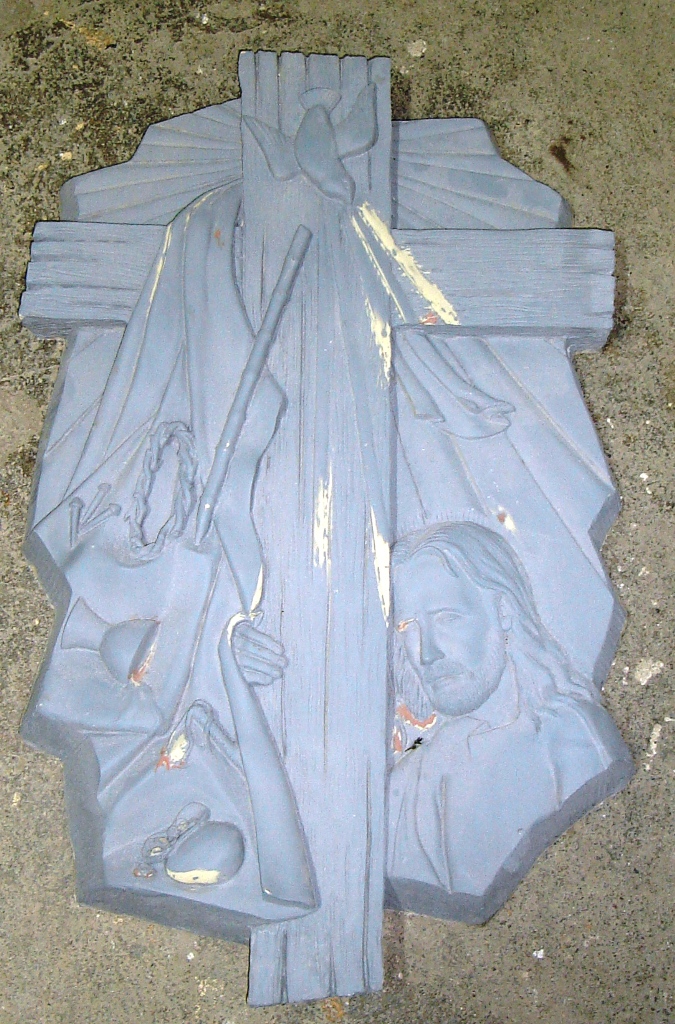
Dear friends, when we make a liturgical cross for Lent, we don’t start with decoration—we start with devotion. Our Liturgical Cross Lent 30″ is crafted in cast stone and brought to life through the kind of patient hand-finishing our artisans have practiced for more than three decades. The result is a piece that holds attention gently, the way prayer does: with consistency, with reverence, and with quiet strength.
Craftsmanship and material
This cross is produced in cast stone, then finished by hand so the surface reads clearly from a few steps away and still rewards closer viewing. In our atelier, we treat finishing as the final “language” of the sculpture—how light travels across edges, how details remain crisp, and how the overall presence feels balanced rather than heavy. For a sacred-space centerpiece, that balance matters.
Religious symbolism that speaks with restraint
During Lent, the cross becomes more than an object; it becomes a focus point for contemplation—an invitation to return, to repent, and to trust. We design our liturgical crosses to carry that meaning without theatricality. The form stands as a sign of sacrifice and hope, and it helps a chapel or sanctuary hold the season’s rhythm: solemn, prayerful, and oriented toward renewal.
Placement and use in chapels, sanctuaries, and devotion
Because this cross is sized for presence, it works beautifully where people naturally gather—near the entrance to a chapel, on a sanctuary axis, or within a dedicated devotional setting. In our experience, a liturgical cross performs best when it has a respectful “breathing space” around it: enough room for sightlines, enough quiet for the eye to rest, and enough stability in the environment for the faithful to linger.
- Chapel placement: Consider a focal position where the cross anchors prayer and processional movement.
- Sanctuary use: Place it so it complements altar sightlines rather than competing with them.
- Private devotion: Use it as a steady point for reading, rosary, and quiet reflection.
Care, handling, and long-term beauty
Cast stone is a lasting material, but sacred objects deserve thoughtful care. We recommend routine dusting with a soft, dry cloth and avoiding harsh abrasives that can dull the finish. If your cross is installed in a high-traffic area, a gentle cleaning schedule helps preserve the clarity of the hand-finished surface. For any installation-specific concerns, our team can advise on finishing compatibility and best practices for your setting.
FAQ
1) Is this liturgical cross suitable for a chapel or sanctuary, or is it more for home devotion?
Yes—this is made to serve both. In our workshop, we consider how a cross will read in a room: from a distance for liturgical focus, and up close for the tactile honesty of the finish. We regularly support churches, clergy, and designers with placement guidance so the piece harmonizes with the space rather than overpowering it.
2) Can we commission a different size for our space?
Absolutely. We offer custom sizing for liturgical cross commissions when a project requires a specific scale or sightline. Our artisans can adapt the proportions so the cross feels right in your sanctuary geometry—balancing presence, visual weight, and the practical realities of installation. If you tell us the intended location and viewing distance, we’ll help you choose the most fitting approach.
3) What does “hand-finished” mean in practice for a cast-stone cross?
Hand-finishing is where the sculpture becomes truly yours. Our team refines surfaces so details remain crisp, edges feel clean, and the overall form catches light in a devotional, steady way. This is the stage where we reduce unwanted casting roughness and bring the piece to a coherent visual rhythm—something you can see immediately and feel over time.
4) How should we clean and maintain it after installation?
For day-to-day care, we recommend gentle, routine dusting with a soft, dry cloth. Avoid abrasive cleaners that can affect the surface treatment. If your cross needs deeper cleaning due to environmental conditions, we’ll advise on a careful approach to protect the finish and preserve the clarity of carved details.
5) What should we consider when choosing placement for a cross like this?
Think in sightlines and atmosphere. A liturgical cross should anchor prayer without competing with key liturgical elements. We typically recommend leaving space around it so the faithful can see it clearly, and so the room retains a calm, contemplative “pause.” If you’re working with a designer or clergy team, we can help you plan a placement that respects the space’s flow.
Inquire about this sculpture
Inquire about this sculpture
This story accompanies the sculpture Liturgical Cross Lent 30″ in our catalog.