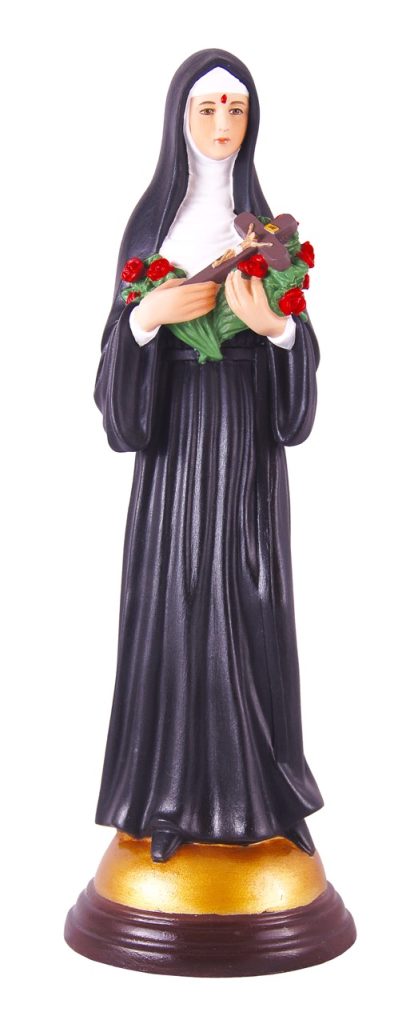
There are sculptures that impress from a distance, and then there are sculptures that draw you closer—quietly, faithfully. St. Rita is made for that second kind of attention. Our artisans shape the form with the discipline of Italian-trained craft, so the figure holds its dignity in every line: from the posture to the smallest devotional details you’ll notice when you stand in front of it.
Craftsmanship and material
We build this work through the traditional language of bronze sculpture: lost-wax casting in the foundry, followed by careful chasing and finishing. Once the casting is released, our team refines surfaces by hand—addressing the kinds of casting imperfections that appear in every bronze process, then bringing the figure to a clean, devotional readability.
Our heritage approach to surface treatment is what gives St. Rita her character. We apply a patina with an eye for depth and restraint, then finish with polishing where appropriate so the highlights feel intentional rather than loud. The result is a surface that looks alive in changing light—warm, grounded, and made to belong in sacred spaces.
Religious symbolism and devotional presence
St. Rita is a saint of endurance and intercession, and her presence carries a particular kind of comfort. In our studio, we focus on how the sculpture “holds” prayer: the calm of the face, the steadiness of the silhouette, and the way the figure invites reflection without demanding attention.
When placed where people naturally pause—near a pew, by a doorway of passage, or at a home altar—this kind of devotional sculpture becomes part of the rhythm of daily life. It’s not only an object; it’s a companion for intention, thanksgiving, and quiet requests.
Placement and use in a sacred space
For a chapel or church setting, we recommend choosing a spot where the figure can be approached comfortably—where the faithful can stand, read the form, and pray without obstruction. In a home, St. Rita works beautifully on a dedicated altar shelf, a side table in a prayer nook, or a modest devotional corner where light falls gently across the surface.
Because bronze carries warmth, it pairs well with traditional materials—wood, stone, and marble accents—without competing with them. If your space already has a focal devotional element, we suggest positioning St. Rita so she complements the existing rhythm rather than competing for it.
- Chapel: place where visitors can pause and face the figure directly.
- Home altar: keep it at eye level for daily prayer and remembrance.
- Lighting: soft, indirect light brings out patina depth and finishing highlights.
- Composition: allow breathing space around the figure so details remain readable.
Care, protection, and long-term beauty
Bronze is durable, but devotional pieces deserve thoughtful care. We advise gentle cleaning and protection from harsh conditions. Avoid abrasive cloths that can dull the finishing. Instead, use a soft, dry microfiber cloth for routine dusting, and for deeper cleaning follow a light touch—never aggressive scrubbing.
Patina is part of the sculpture’s beauty, and it responds to the environment. If the piece is displayed in a humid area, we recommend monitoring the space and keeping the figure away from direct moisture. For outdoor exposure or high-splash environments, we would guide you toward a protective approach appropriate to your setting.
- Routine: dust with a soft, dry cloth.
- Cleaning: use gentle methods—no abrasives.
- Environment: protect from sustained humidity and direct moisture.
- Handling: hold by stable areas when moving; avoid stressing delicate details.
FAQ
1) Is St. Rita bronze suitable for a home altar or only for churches?
Yes. We make devotional bronze sculptures to live where people pray. St. Rita is especially well-suited to a home altar shelf, a prayer corner, or a dedicated devotional table because her presence is serene and readable at close range. In churches and chapels, she also works beautifully where visitors can approach and face the figure directly for reflection.
2) How do you finish bronze so it looks devotional rather than decorative?
Our finishing is guided by restraint. After lost-wax casting, our artisans chase and refine the surface by hand, then apply a heritage patina with attention to depth and tonal balance. We polish selectively so highlights feel natural and the overall effect remains reverent. The goal is a surface that supports prayer—quiet, warm, and enduring.
3) What’s the best way to place the sculpture for viewing and prayer?
We recommend eye-level placement when possible, especially in a home setting. In a church or chapel, choose a spot where people can stand comfortably and face the sculpture without obstruction. Soft, indirect lighting helps the patina show its character. Most importantly, leave enough space around the figure so details remain clear and the silhouette reads with dignity.
4) How should we clean and protect the bronze over time?
For everyday care, dust with a soft, dry microfiber cloth. Avoid abrasive materials that can dull the finish. If the sculpture is in a humid environment, keep an eye on moisture exposure and avoid direct contact with water. With gentle cleaning and thoughtful placement, bronze patina typically retains its beauty for years of devotion.
5) Can our studio commission a custom size of St. Rita?
Yes. We regularly support custom sizing and commission requests for clients who want St. Rita scaled to their specific sacred space. Our team can advise on proportion, placement needs, and how the finishing should be tuned to the final scale. If you’re planning a chapel installation or a larger altar presence, inquire and we’ll guide you through the options.
Inquire about this sculpture.
This story accompanies the sculpture St. Rita 12″ in our catalog.