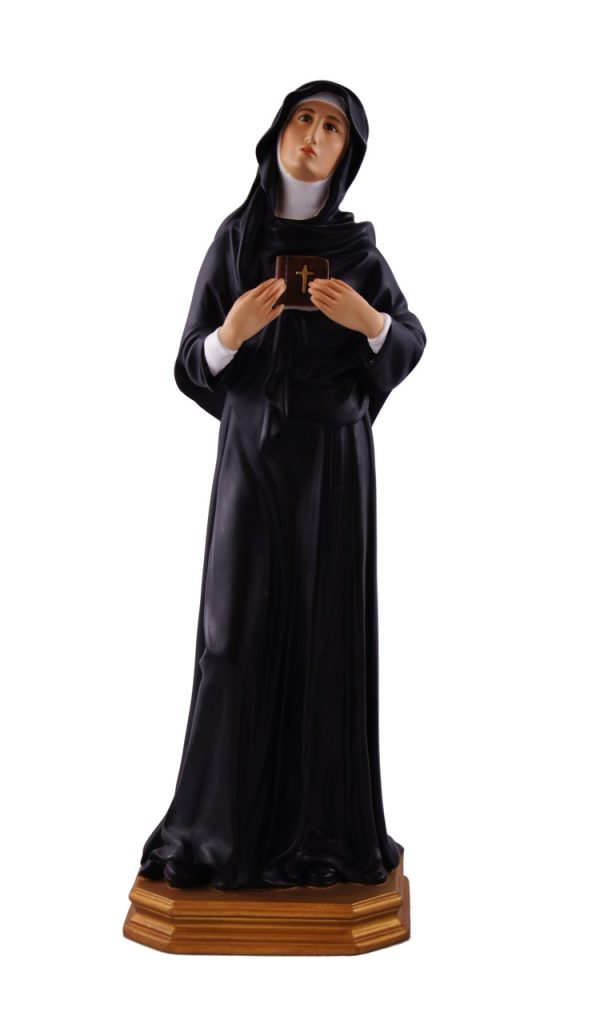
St. Monica has always carried a particular kind of strength—the strength of patience, the strength of prayer, the strength of a heart that keeps returning to God. In our studio, we approach her with the same care we bring to every commission: careful modeling, faithful sacred proportions, and a finish that holds its beauty in real light.
At 20 inches, this sculpture is sized to live comfortably in both chapel settings and private devotion. It’s the sort of piece that doesn’t demand attention; it earns it—quietly, over time.
Craftsmanship and material presence
Our artisans are Italian-trained, and our process is built around disciplined craft. We shape the figure with attention to gesture and expression, then translate that intent into a durable sculptural form through foundry work and finishing. The goal is not only likeness, but a surface that feels alive—where details remain crisp and the overall silhouette reads clearly from across the space.
Most of our bronze work is finished with a patina developed in layers, then sealed and refined to achieve depth rather than glare. We also pay close attention to edges, transitions, and mounting points so the sculpture feels stable and intentional where it’s installed.
Religious symbolism in the figure
St. Monica is recognized for her motherly perseverance and her prayerful trust—an image that resonates deeply with families, caregivers, and anyone who has learned that devotion often looks like waiting. When we craft a saint figure, we treat symbolism as something you can feel: the calm posture, the grounded presence, and the dignified expression that invites reflection without theatricality.
For many buyers, this is the appeal: St. Monica becomes a companion to prayer—especially in spaces where people come to ask for peace, guidance, and strength through difficult seasons.
Placement and use in sacred spaces
In a chapel, St. Monica’s scale works beautifully near a side altar, in a devotional niche, or as a companion figure within a broader arrangement. For a home altar, the 20″ size is ideal for a tabletop or shelf display where the sculpture can be seen and approached without crowding the room.
When we advise on placement, we think like installers: consider the sightline from where people kneel or sit, the direction of natural light, and the background color of the wall or altar surface. A quiet saint figure like St. Monica benefits from a stable, respectful setting—one that lets the details and patina finish read clearly.
Care and long-term beauty
To keep her presence luminous, we recommend gentle, regular care. Dust with a soft, dry cloth, and avoid harsh cleaners that can disturb oxidation and surface treatment. If the sculpture is placed in a high-humidity environment, we advise monitoring conditions so the finish remains even and protected.
Our team typically designs these works for real use—handled, admired, and lived with—so long as they’re treated with the same respect you’d give any sacred object.
FAQ
-
Is this St. Monica sculpture suitable for a chapel side altar?
Yes. The 20″ scale is a strong fit for chapel side altars, devotional niches, and prayer corners where you want a saint figure to feel present without overwhelming the space. In our studio, we often recommend pairing it with complementary devotional elements—such as a simple altar cloth, a consistent color backdrop, or a nearby candle—so the figure reads clearly in the flow of worship.
-
Can our church or buyer commission a custom size of St. Monica?
Absolutely. We regularly work with clients who need a different height to match an altar, niche, or architectural rhythm. When you inquire, we’ll guide you through the practical considerations—viewing distance, available mounting space, and the overall balance of the sacred-space arrangement—so the final piece feels made for your location, not simply “placed” there.
-
What finish considerations should we plan for bronze saint sculptures?
For bronze works, finishing is where character becomes visible: patina depth, surface refinement, and how the sculpture responds to light. Our atelier typically applies and refines patina in layers, then protects the surface so it maintains its tone over time. We also pay attention to how details hold up at close viewing distances, especially around the face and hands.
-
How should we clean and protect the sculpture in a home altar setting?
Use a soft, dry cloth for routine dusting. If you need deeper cleaning, we recommend avoiding abrasive materials and harsh chemical cleaners that can affect the surface treatment. Keep it away from direct sprays, strong solvents, and prolonged exposure to moisture. With careful handling and gentle maintenance, the patina and sculptural details remain beautifully stable.
-
Do you help with installation or mounting decisions for sacred-space placement?
We guide buyers on placement and practical installation considerations so the sculpture sits securely and reads well from the main viewing angles. For chapel and home settings, we look at sightlines, background contrast, and how the piece interacts with nearby devotional items. If your space calls for a specific mounting approach, we can discuss options during commissioning.
Inquire about this sculpture, and we’ll help you determine the best fit for your chapel or home altar.
This story accompanies the sculpture St. Monica 20″ in our catalog.