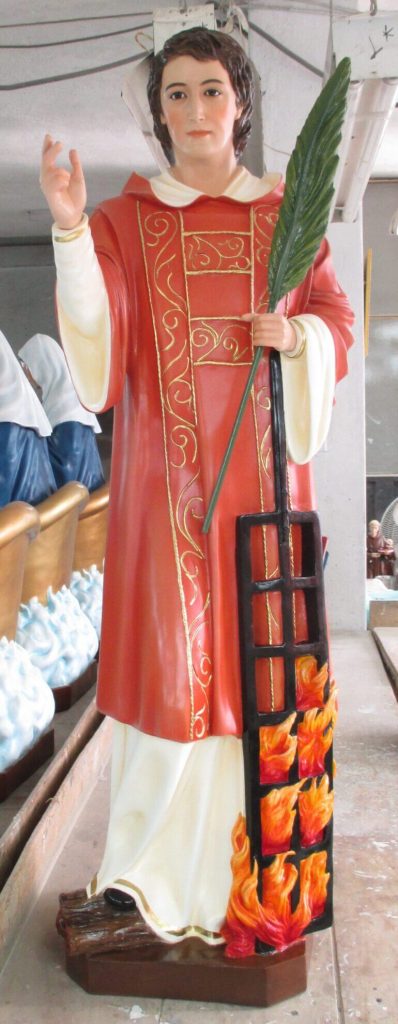
In our studio, we treat every saint’s figure as both an artwork and a companion for worship. St. Lawrence—so often depicted with steadfast courage—demands a sculptural language that is clear at a distance and intimate up close. Our St. Lawrence 48″ sculpture is designed for that balance: monumental enough to anchor a sacred space, refined enough to reward the slow glance.
Craftsmanship and material character
We build our religious sculptures through the same disciplined process our artisans have practiced for decades: careful modeling, precise moulding, and finishing that respects the figure’s anatomy and devotional intent. The goal is not only likeness, but presence—how light moves across the surfaces, how the silhouette reads from across the room, and how the details hold their dignity in real space.
For works of this kind, our finishing approach typically includes surface treatment and patina development that deepen over time. We polish and refine where the figure should catch the eye, while allowing a natural, reverent surface character to remain. The result is a sculpture that feels made—not assembled—and that belongs in a chapel as naturally as it does in a home with a dedicated prayer corner.
Religious symbolism in sculptural form
St. Lawrence is remembered for courage and fidelity, and our sculptural choices aim to keep that meaning legible. In a saint’s figure, symbolism must be more than iconography—it must read as character. We shape the stance and the flow of form so the viewer senses steadiness and resolve, even before they recognize every attribute.
When placed in a devotional setting, the sculpture becomes a quiet teacher: it draws the eye, then holds it. That is why we pay close attention to the figure’s proportions and the way the surface is finished—so the devotional message stays clear, not diluted by harsh glare or overly uniform texture.
Placement and use in chapel or home
We recommend thinking of St. Lawrence 48″ as a focal figure. In a chapel, it can serve as a devotional anchor near an altar, side chapel, or prayer niche—anywhere the faithful naturally pause. In a home, it works beautifully in a dedicated sacred space: a console with a candle, a quiet entry alcove, or a room where you gather for evening prayer.
To help the sculpture speak properly, consider these practical placement points:
- View distance: Position it so the silhouette is readable from your primary seating area.
- Lighting: Aim for soft, directional light that grazes the surface rather than blasting it.
- Background: A calmer backdrop helps the figure’s contours and finishing stand out.
- Companions: If you add candles or a small devotional arrangement, keep the focus on the saint’s form.
Because this is a commission-minded piece, we also welcome conversations about your space. If your room has unusual sightlines or architectural constraints, our team can guide you toward a placement approach that preserves the sculpture’s intended presence.
Care and long-term preservation
Religious sculpture lives best when it is treated with steady, gentle care. For most indoor sacred artworks, we recommend regular dusting with a soft, dry cloth and avoiding harsh cleaners that can disturb surface treatment. If your environment is particularly dry, humid, or exposed to frequent temperature changes, we advise maintaining stable indoor conditions to protect the sculpture’s finish over time.
When you do clean, we keep it simple: light dust removal, no abrasive materials, and no aggressive chemical products. If you ever notice a change in surface tone—especially where light hits most strongly—our studio can advise on the most appropriate conservation-minded approach for your specific finish and environment.
FAQ
1) Is this St. Lawrence sculpture suitable for a chapel setting?
Yes. We design our saint figures to function as true focal points in worship spaces—readable from a distance, dignified up close, and finished to feel at home in a chapel environment. If you’re coordinating with clergy or a church procurement team, we can also discuss how the sculpture will sit within your existing devotional layout and lighting conditions.
2) Can our studio help with custom sizing for a specific space?
We frequently work with clients who need a particular scale to fit an architectural niche, altar sightline, or home prayer corner. Our team can guide you through custom sizing and commission options so the sculpture’s presence matches your space rather than forcing it to adapt. Share your measurements and intended placement, and we’ll advise on the best approach.
3) What kind of finish should we expect, and how does it age?
Most of our religious bronze work is finished with surface treatment and patina development that supports a rich, devotional character over time. Light, humidity, and indoor conditions influence how surfaces evolve, but the aim is always a stable, dignified appearance. We can recommend care habits tailored to your environment to help the finish remain beautiful for years.
4) Where should we place St. Lawrence 48″ for the best visual impact?
We typically recommend placing the figure where people naturally pause—near an altar, side chapel, or a dedicated prayer area in the home. For best impact, use soft directional lighting that grazes the surface and keeps glare under control. A calmer background also helps the contours and finishing read clearly.
5) How do we clean and preserve the sculpture without damaging the surface?
For routine care, we advise gentle dusting with a soft, dry cloth and avoiding abrasive tools or strong chemical cleaners. If the sculpture is in a high-traffic area, dusting more frequently helps prevent buildup. If you ever need deeper conservation guidance, our studio can recommend a careful, finish-respecting approach.
Inquire about this sculpture
If you’d like St. Lawrence 48″ to fit your chapel or home perfectly, inquire with our studio and we’ll guide you through the right commission path.
This story accompanies the sculpture St. Lawrence 48″ in our catalog.