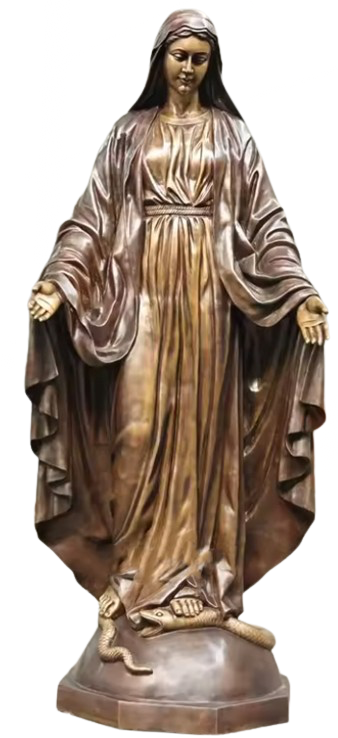
At our studio, we’ve spent more than thirty years shaping sacred sculpture—where craftsmanship isn’t decoration, it’s service. Lady of Grace is made for the spaces that ask for stillness: chapels, shrines, prayer rooms, and quiet corners of a home where the heart returns to prayer.
We approach a bronze figure with the same discipline our Italian-trained artisans bring to monuments—sound form, honest casting, and a surface treatment that deepens with time rather than fighting it. The result is a piece that reads with dignity from across the room, and rewards you when you come closer.
Craftsmanship and materials we use
We build Lady of Grace in bronze using traditional foundry practice—most commonly through lost-wax casting—so the sculpture holds fine modeling and crisp transitions in the drapery and facial work. After casting, our team performs the finishing that makes bronze feel alive: smoothing, refining edges, and correcting minor casting flaws so the figure remains visually coherent from every angle.
Then comes the patina work. Our finishing process develops a controlled surface oxidation that settles into the recesses and highlights the form without turning the piece into a patchwork of color. The final polishing is restrained—enough to catch the light and honor the classical silhouette, never so much that the sculpture looks “overworked.”
Religious symbolism and the presence of grace
“Grace” in sacred art is never only an idea—it’s a posture, a gaze, and a rhythm of gesture. Lady of Grace is composed to communicate serene elegance: the figure’s calm expression and balanced stance invite quiet attention, while the careful handling of the garment contours gives the work a sense of movement held in stillness.
In a church or shrine setting, this kind of sculptural language supports devotion. It gives the faithful a focal point for prayer—something steady enough to hold a candle’s glow, and respectful enough to sit naturally among liturgical furnishings.
Where Lady of Grace belongs in a chapel or prayer room
We regularly guide clients on placement because the right location makes the sculpture feel intentional rather than placed. For Lady of Grace, we typically recommend:
-
Near a dedicated prayer focal point—a side chapel, shrine niche, or a quiet alcove where the figure can be approached without crowding.
-
On a stable base or plinth that keeps the silhouette readable at the distance of typical seating.
-
With thoughtful sightlines so the face and hands remain the first thing the eye understands, even when the room is dim.
Because we offer custom sizing, we can scale the sculpture to fit your architecture—whether you’re commissioning for a compact prayer room or a larger sacred space that needs stronger visual presence.
Care, protection, and long-term beauty
Bronze is built to last, but it still benefits from good stewardship. Our finishing and patina are designed to be stable in normal indoor conditions, and our team typically recommends simple care routines:
-
Dust gently with a soft, dry cloth to avoid trapping grit in recesses.
-
Avoid harsh cleaners and abrasive materials that can disturb the patina surface.
-
Handle humidity thoughtfully—especially in spaces with fluctuating moisture—so the patina ages evenly rather than unevenly.
If you’re placing the sculpture in a more exposed environment, our artisans can advise on protective finishing strategies suited to the conditions of your site.
FAQ
How do we choose the right size of Lady of Grace for our chapel?
We start with sightlines: how far the faithful will be from the sculpture and how the figure will sit within existing furnishings. In our studio, custom sizing is a practical way to ensure the face, hands, and drapery read clearly without overwhelming the space. If you share your room layout, we’ll help you match the sculpture’s scale to the architecture.
Will the bronze patina look different over time?
Bronze patina naturally evolves as it settles into its environment. Our finishing is intentionally controlled so the sculpture develops depth rather than unpredictable blotching. In indoor prayer rooms with stable conditions, the surface typically maintains a consistent character. We can also advise on care routines that help the patina age evenly and remain visually coherent.
Is Lady of Grace suitable for a shrine niche or side chapel?
Yes—this is exactly the kind of sacred placement where the figure’s calm presence becomes most meaningful. We design the sculpture to hold a dignified silhouette from multiple angles, which works well when a niche frames the work. When planning placement, we also consider how the sculpture will be approached so the faithful can pray without obstruction.
How should we clean a bronze sculpture like this?
For routine care, we recommend gentle dusting with a soft, dry cloth. Avoid cleaners that are strong, acidic, or abrasive, because they can alter the patina surface. If you need deeper cleaning due to environmental buildup, our studio can guide you on the safest approach for preserving the finish and the crispness of the sculpted details.
Can our studio commission a version tailored to our space?
Absolutely. We frequently commission sacred bronzes to match specific architectural needs—especially when a client has a defined niche, altar relationship, or desired scale. Our artisans can work with your requirements to adjust sizing and presentation so the sculpture feels integrated into your sacred setting, not simply added to it.
This story accompanies the sculpture Lady of Grace in our catalog.