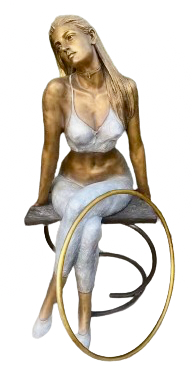
There is a particular kind of beauty we look for in a human figure sculpture: not performance, but poise—an inner steadiness that reads in the curve of a shoulder, the balance of a stance, and the calm intention of the face. Our artisans have spent decades refining that language in bronze, where elegance must be both visible and durable.
When you stand before our bronze human figure, you should feel the craft working beneath the surface: the weight of the form, the clarity of the contours, and the way the light travels across the finish. The result is a centerpiece that does not shout. It holds.
Craftsmanship and material: bronze, patina, and Italian discipline
This sculpture is made from bronze in the Italian tradition our workshop has carried for over thirty years. We work with the discipline of foundry practice and the sensitivity of sculptural modeling—so the figure reads as lifelike without losing the strength of bronze as a material.
Our process emphasizes surface treatment and finishing. Bronze is not simply cast and left alone; it is refined. We bring out the details in the contours and features, then develop a rich patina that adds depth and character. That patina is not an afterthought—it is part of the sculpture’s voice, giving the piece warmth and a sense of lived-in elegance.
Religious symbolism: dignity, incarnation of grace, and the human form
Even when a work is presented as a figure of elegance rather than a named saint, the human form carries a profound spiritual grammar. In religious art, the body is often treated as a vessel—an expression of dignity, restraint, and the quiet power of grace. Our poised figure speaks to that same tradition through balance and composure.
We design the posture to feel intentional: the figure’s stillness becomes a kind of invitation. In a sacred space, that invitation can support contemplation—offering a visual rhythm that steadies the eye and softens the atmosphere. In a gallery or home, it functions as a reminder of the sacred in everyday presence: form, attention, and respect.
Placement and use: where poise becomes atmosphere
We see this kind of bronze human figure sculpture thrive wherever visitors slow down—spaces with enough air around the work to let it breathe. In a private collection, it becomes a focal point in a foyer, a gallery room, or a refined living area. In public settings, it brings an elevated calm that suits lobbies, institutional halls, and cultural venues.
Our team can also advise on placement so the sculpture’s proportions read correctly from the primary viewing distance. If you’re planning a bespoke installation, we can assist with mounting considerations and help ensure the piece complements its surroundings—architecturally and emotionally.
Care and longevity: protecting patina and preserving detail
Bronze is built for endurance, but it still deserves thoughtful care. We recommend regular, gentle cleaning to remove dust and environmental residue without damaging the patina. Use soft, dry cloths for routine maintenance and avoid harsh abrasives that can dull the finish.
For pieces displayed in challenging environments—coastal air, heavy pollution, or frequent outdoor exposure—we advise protective strategies tailored to the setting. Our artisans understand the balance: preserving the patina’s depth while safeguarding the fine details that make the figure feel alive.
FAQ
-
Is a bronze human figure sculpture suitable for a chapel or church interior?
Yes. We often find that a poised human figure supports the atmosphere of a sacred space through dignity and stillness. While some commissions are explicitly devotional, a work like this can function as a contemplative presence—especially when placed where visitors naturally pause. Our team can help you consider sightlines, lighting, and surrounding materials so the sculpture harmonizes with the room.
-
How do you achieve the lifelike detail in a bronze casting?
In our workshop, detail begins with disciplined modeling and careful casting practice. After casting, we refine surfaces so contours and features remain crisp rather than flattened. Finishing is where the sculpture truly comes alive: polishing where appropriate, careful surface treatment elsewhere, and patina work that enhances depth. The goal is a figure that reads naturally from multiple angles.
-
Will the patina change over time, and how should we care for it?
Patina is a living surface. Over time it can deepen and subtly shift with light, humidity, and air quality. We recommend gentle dusting and careful cleaning methods that respect the finish. If the sculpture is in a demanding environment, we advise protective measures suited to that location. Our team can also guide you on maintenance routines that keep the patina beautiful without over-handling.
-
Can we commission a version tailored to our space or preferences?
We do bespoke work and we’re comfortable adapting pieces to better fit your architectural context. That can include adjustments to finish emphasis, surface treatment approach, and installation planning. If you’re working with a designer or clergy team, share your intended placement and lighting conditions—our artisans will help shape the sculpture’s presentation so it feels intentional in your environment.
-
Do you help with installation and mounting?
Yes. For installations where the sculpture needs secure mounting and thoughtful presentation, our studio can assist with installation considerations. We work with the realities of the site—flooring, sightlines, and how visitors will approach the piece. Our aim is simple: the sculpture should stand with confidence and look right in its setting from day one.
Inquire about this sculpture.
This story accompanies the sculpture Elegantly Poised Human Figure Sculpture in our catalog.