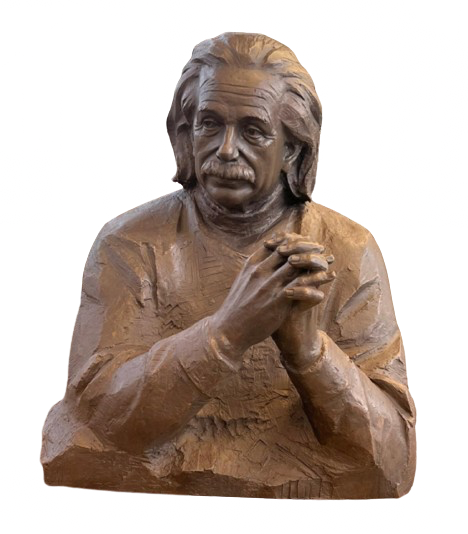
There are portraits that simply depict a face, and then there are portraits that hold a presence. In our atelier, we approach the Einstein bust with that second intention. We model and cast the form so the expression reads at a distance—then we refine the surfaces so the piece feels alive up close, like a mind caught mid-thought.
Craftsmanship and material character
Our bronze work is hand-cast by Italian-trained artisans, using the lost-wax tradition that has served sculptors for generations. The process begins with careful modeling, then proceeds through mould-making and casting in bronze alloy, followed by finishing and surface treatment. We refine the contours, correct small casting imperfections where they occur, and bring the final surface to a consistent, dignified sheen.
Because bronze is a living metal, the finish matters. Most of our bronze sculptures are finished and protected to preserve the character of the surface—so the bust can stand as a long-term companion in a home, office, or academic setting.
Religious symbolism in a scholarly figure
Einstein is not a saint, yet the bust carries a devotional kind of symbolism: the reverence for truth, the discipline of inquiry, and the humility of contemplation. In the liturgical companion spirit, we think of this work as a bridge—between the mind’s search and the soul’s attentiveness. The contemplative expression invites the same inward pause we aim for in sacred-space sculpture: a moment to look, breathe, and reflect.
Placed thoughtfully, the bust can complement religious art without competing with it—offering a different language of devotion, one rooted in intellectual pursuit and wonder.
Placement and use in real spaces
This kind of bust is made to be encountered. We typically recommend display where it can be seen at eye level and approached without rushing: a study shelf, a library niche, a reception area that values calm, or an academic office where conversation often begins with ideas.
-
Home study: Pair it with books and warm lighting so the facial features and patina catch gently.
-
Library or academic office: Place it where visitors naturally pause—near a reading chair or desk edge, not behind clutter.
-
Contemplative reception spaces: If your environment already holds sacred art, position the bust to add a scholarly “quiet” rather than a competing focal point.
We also support custom sizing for clients who want the bust to fit a specific architectural rhythm—whether that means a more intimate tabletop presence or a more commanding commission-scale piece.
Care and longevity for bronze
Bronze is durable, but it deserves respectful care. In our workshop we finish with longevity in mind, yet everyday handling still matters. Keep the surface free of dust buildup, and avoid harsh cleaners that can disturb the protective surface treatment. A soft, dry cloth is usually the safest first choice for routine maintenance.
If the piece will sit in a high-humidity environment, we recommend controlling exposure and allowing stable indoor conditions. For long-term stewardship, we’re happy to advise on the right cleaning approach for the specific finish you choose during commissioning.
FAQ
1) Can we commission a larger or smaller Einstein bust for our space?
Yes. Our studio offers custom sizes for clients who need the bust to match a mantel, plinth, niche, or a particular viewing distance. When you inquire, we’ll discuss how you want it to read in your room—intimate and close-up, or more monumental for a corridor or academic lobby.
2) How do you finish the bronze so it looks dignified over time?
We cast the bronze and then complete the work through finishing and surface treatment so the details remain crisp and the overall tone stays consistent. Most of our bronze finishing is designed to preserve the character of the surface and resist everyday wear. If you have a specific aesthetic—warmer, darker, or more luminous—we’ll guide you toward an appropriate finish direction.
3) Where should we place the bust if we want it to feel contemplative, not decorative?
We recommend eye-level placement where people naturally slow down: a study shelf, a quiet reception corner, or a library niche. Avoid placing it where it’s constantly bumped or visually crowded. If your space already includes sacred art, we’ll help you position the bust so it adds a scholarly calm rather than competing for attention.
4) Is this suited for an office or academic setting rather than a religious one?
Absolutely. While the contemplative symbolism is meaningful, the bust is also simply a refined work of bronze portraiture. Many of our clients choose it for offices, libraries, and academic environments where ideas matter. It reads as intellectual heritage—quiet, composed, and built for daily presence.
5) What’s the best way to clean and maintain a bronze bust?
For routine care, use a soft, dry cloth to remove dust gently. Avoid abrasive materials and harsh chemical cleaners, since they can affect the protective surface treatment. If you’re unsure about the right method for your finish, contact our studio and we’ll recommend a maintenance approach suited to your setting and the way the piece is displayed.
Inquire about this sculpture.
This story accompanies the sculpture Einstein Bust in our catalog.