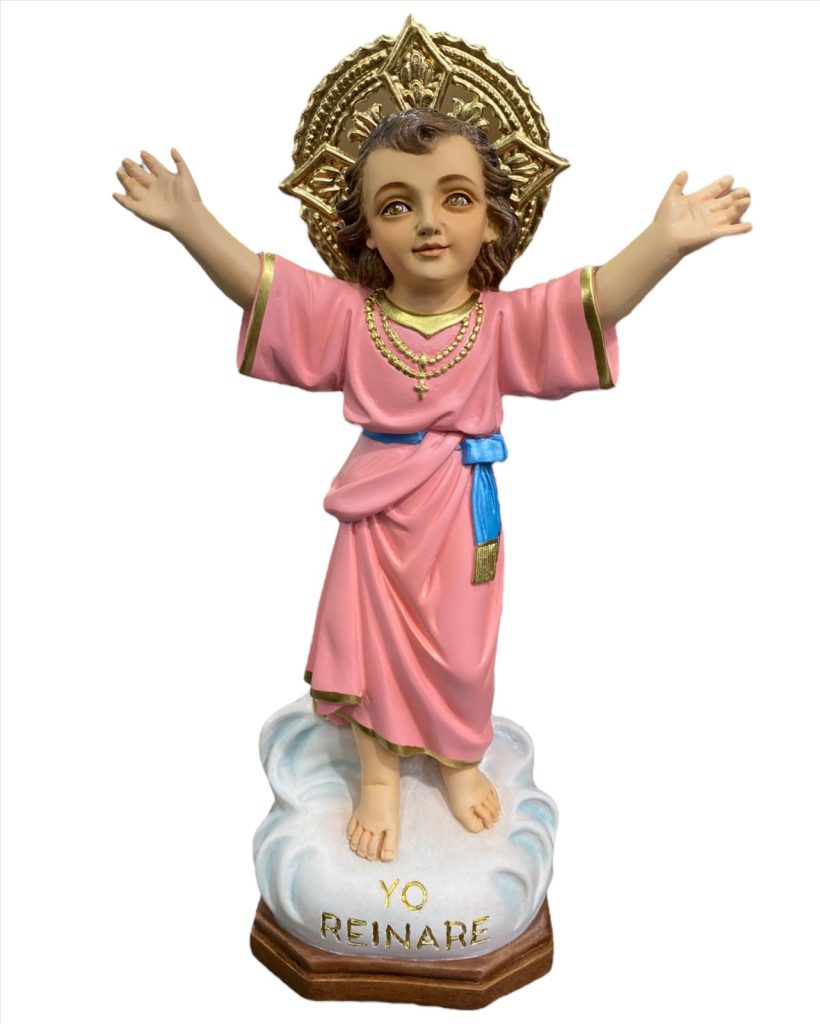
In our workshop, we’ve learned that devotion is carried in details. Not the loud ones—those are easy. It’s the disciplined ones: the proportion of a face, the softness of a surface, the way light catches a painted gaze. That’s why our Divino Nino 12-inch with painted eyes is made with a steady hand from start to finish.
Craftsmanship/material
We create Divino Nino in cast stone, a material prized in sacred sculpture for its ability to hold fine form and remain stable for long-term display. Our artisans work through the full workflow—preparing the sculptural model, producing the mould, casting, and then refining the surface so it reads clearly at the distance where people actually stand.
Once the form is set, we focus on the face. The painted eyes are not an afterthought; they are the heart of the piece’s presence. Our team applies the hand-painted work with careful attention to alignment and expression, so the eyes feel calm rather than theatrical—devotional, not decorative.
Religious symbolism
Divino Nino represents the tenderness of the Incarnation: God made near, not distant. In a devotional space, the eyes matter because they guide attention. They draw the mind back to the person of Christ and invite a quiet kind of prayer—one that doesn’t demand words.
When our artisans paint the eyes, we aim for a gaze that feels human and prayer-ready. The goal is not realism for its own sake. It’s spiritual clarity: a face that can hold contemplation, a presence that feels steady when the room is still.
Placement/use
This is the kind of statue that belongs where people gather for reflection. Many collectors choose it for a chapel niche, a family prayer corner, or a home altar. At 12 inches, Divino Nino is well-suited to tabletop and shelf placement, where the painted eyes can be seen without straining.
For churches and clergy commissioning devotional works, we also support custom sizing. That flexibility helps you match the statue to the architecture—whether the piece needs to sit close to a devotional focal point or stand as a gentle centerpiece in a meditation area.
Care
Cast stone and painted surfaces reward gentle handling. We recommend regular dusting with a soft, dry cloth. Avoid harsh cleaners or abrasive materials, which can dull the finish and disturb the painted details over time.
If the piece is displayed in a room with strong sunlight, consider rotating its position or limiting direct exposure. Light and heat are the most common causes of gradual fading and surface stress in painted religious sculpture.
When you receive your Divino Nino, handle it by the base and keep it away from frequent impacts. With careful care, the painted eyes and sculpted form will remain a calm focal point for years of prayer.
FAQ
-
Can our studio match the expression of the painted eyes to the devotional tone we want for our chapel?
Yes. In our atelier we treat the eyes as the emotional center of the sculpture. Our artisans focus on alignment, softness, and overall gaze so the expression reads devotional rather than theatrical. For chapel commissions, we can discuss the mood you’re aiming for and guide you toward the version that fits your space and viewing distance.
-
Is cast stone a good choice for a religious statue that will be displayed regularly?
Cast stone is a dependable material for devotional display. In our workshop we choose it because it holds sculptural detail well and supports a stable surface for finishing. With routine dusting and sensible placement away from harsh chemicals, cast stone religious pieces are made to remain beautiful through years of use.
-
Where should we place Divino Nino in a home or church so the eyes are most meaningful?
We typically recommend placement at a comfortable viewing height—on a shelf, tabletop, or a dedicated prayer corner—so the painted eyes can be seen clearly without leaning in. In chapels, people often respond best when the statue sits near a place of quiet attention, where the gaze can anchor short prayers and moments of reflection.
-
Do you offer custom sizing for Divino Nino sculptures?
Yes. Our studio supports custom sizing for clients who need the statue to fit a specific architectural context. Whether you’re commissioning for a chapel niche, a larger devotional installation, or a particular display requirement, we can guide the scale so the sculpture feels proportionate and intentional in your space.
-
How should we clean the statue to protect the painted eyes and finish?
Use a soft, dry cloth for regular dusting. We advise avoiding abrasive cleaners and strong chemicals, which can dull the finish and affect painted areas. If you need deeper cleaning, ask our studio for guidance before applying anything—protecting the eye details is always our priority.
Inquire about this sculpture
This story accompanies the sculpture Divino Nino 12″ Painted Eyes in our catalog.