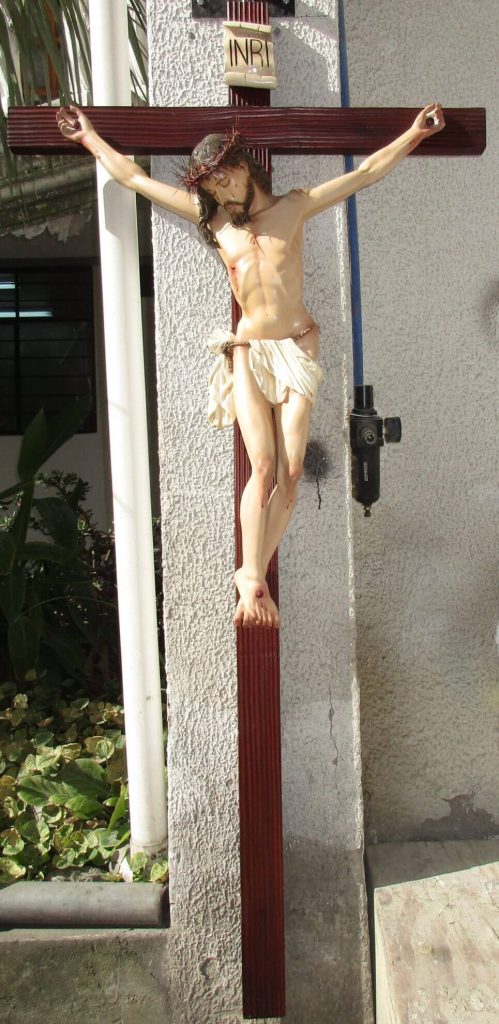
When a crucifix belongs in a chapel or a home with real devotion, it has to do more than look faithful. It has to stand with dignity—balanced, legible at a distance, and intimate up close. The Crucifix 68″ dead is designed for that kind of presence: a work that draws the eye, then asks the heart to stay.
Craftsmanship and material character
Our artisans approach each sacred commission with the discipline of Italian studio tradition. We build the sculpture on a sound foundation—work that holds under finishing, polishing, and the long life of a chapel environment. From moulding to surface work, we keep the form crisp and the transitions clean, so the expression doesn’t blur as light moves across the figure.
In pieces like this, finishing is where devotion becomes visible. We refine planes, sharpen contours, and bring out the subtle modelling that makes a crucifix feel alive rather than decorative. The surface treatment is handled with restraint: enough richness to feel dimensional, enough stability to serve for years of prayer.
Religious symbolism in form and stillness
A crucifix carries meaning not only in iconography, but in posture, proportion, and the way the body’s weight is communicated. In the Crucifix 68″ dead, the “dead” depiction is read through stillness—through the calm gravity of the figure and the clarity of the arms and torso. That clarity matters: it helps viewers understand the scene quickly, then linger longer.
We consider how a crucifix speaks from a distance. The silhouette should hold its truth in the first glance, while the details reward the second. This is why our studio treats proportion as spiritual language—so the work feels reverent rather than theatrical.
Placement and use in chapels or homes
For a piece of this scale, placement is not an afterthought. We typically recommend centering the crucifix where it can be read naturally by those who gather—an axis aligned with the room’s focal sightline. In a chapel, that often means mounting it where it becomes a quiet anchor above or near the primary devotional area.
In a home, we suggest a wall setting that keeps the sculpture stable in sight and lighting. Avoid placing it where glare or harsh shadows dominate; the goal is steady viewing during prayer, not a constantly shifting effect. If you’re working with a designer or clergy team, we can help you plan the viewing rhythm so the crucifix feels “right” in the space.
Care for lasting beauty
Religious sculpture lives with people—hands pass by, air moves, seasons change. Our approach to care focuses on preserving the surface treatment and the fine modelling. We recommend gentle, dry cleaning for routine maintenance and careful handling around edges and relief areas.
- Dust regularly with a soft, dry cloth to prevent buildup in crevices.
- Avoid abrasive cleaners that can dull polishing and disturb the surface finish.
- For deeper cleaning, consult our studio so we match the method to the sculpture’s surface treatment.
- In humid environments, ensure airflow and avoid direct exposure to water or condensation.
With thoughtful care, a crucifix like this continues to carry its presence—quietly, faithfully, and with the kind of surface integrity that lets the details remain clear.
FAQ
How do we choose the right size crucifix for a chapel or sanctuary?
We start with sightlines and gathering patterns. A crucifix should be readable from where people stand most often, without forcing viewers to look up sharply or strain. For rooms with high ceilings, we favor a scale that holds the silhouette from a distance. If you share your wall height and typical viewing distance, our studio can advise on a fitting commission size.
Can our studio commission a crucifix with custom sizing or adjustments?
Yes. We frequently produce custom crucifix options to align with a chapel’s architecture, a designer’s plan, or a family’s devotional preference. Our team can adjust proportions and overall scale so the work feels harmonious in its setting. When you inquire, we’ll guide you through what can be tailored while protecting the integrity of the sculptural form.
What finishing approach do you use so the details remain clear over time?
In our workshop we finish with attention to both beauty and durability. We refine surfaces so modelling stays legible under changing light, then apply a stable surface treatment suited to long-term display. The goal is a finish that supports prayerful viewing—rich enough to show depth, controlled enough to resist everyday wear.
How should we clean a crucifix without damaging the surface?
For routine care, use a soft, dry cloth and clean gently, especially around relief and edges. Avoid abrasive products or strong solvents, which can dull or alter the finish. If you need more than dust removal, contact our studio so we can recommend a method appropriate to the sculpture’s surface treatment and finishing.
Is this crucifix suitable for home display, and where should it be placed?
It’s well suited for homes that treat devotion seriously—places where the crucifix becomes a steady focal point. We recommend a stable wall location with balanced lighting and a clear viewing axis from seating or prayer positions. If you’re planning placement with a decorator or architect, tell us the room layout; we’ll help you aim for a respectful, natural sightline.
Inquire about this sculpture.
This story accompanies the sculpture Crucifix 68″ dead in our catalog.