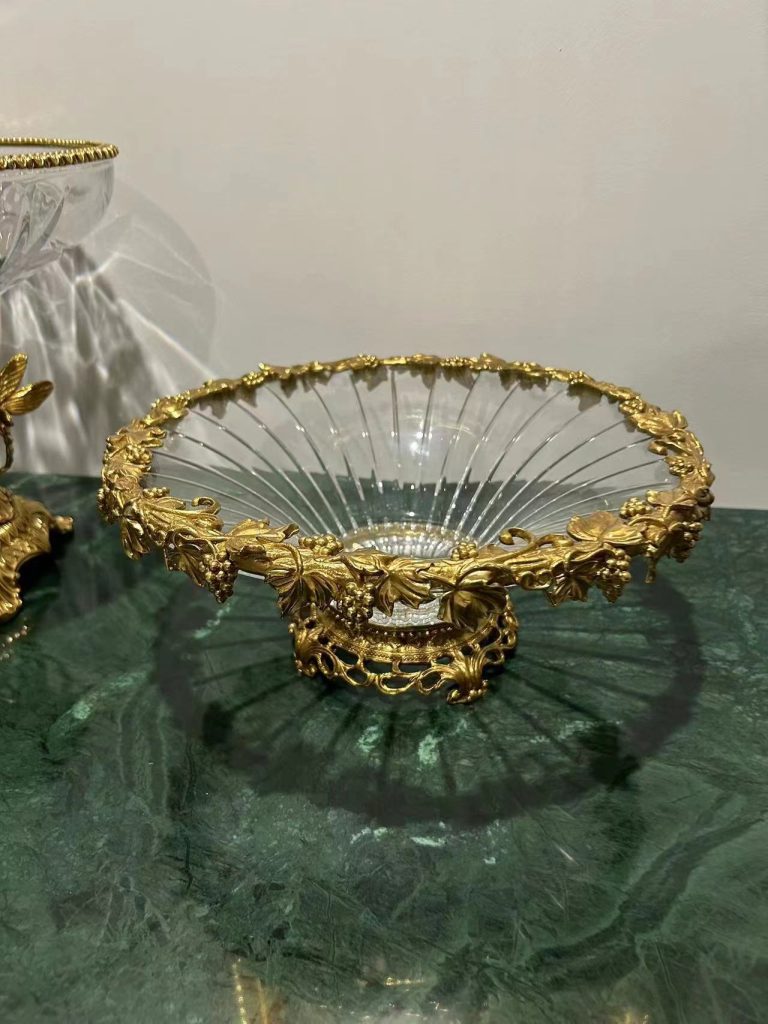
When a sacred space asks for beauty without noise, we reach for bronze. Our elegant bronze decorative objects are made to read well at a distance and reward you up close—through the sweep of the form, the crispness of the detailing, and a finish that carries light with dignity.
Craftsmanship/material
Our artisans work in the Italian tradition, shaping each piece with an eye for proportion and a respect for the material. Bronze is a demanding medium: it must be cast cleanly, assembled with care, and finished so the surface feels intentional—not merely reflective.
Most of our bronze work is produced through lost-wax casting in the foundry, then refined by hand. We focus on alignment, edge definition, and the subtle transitions that make a silhouette feel graceful rather than decorative. After casting, our finishing process brings out the character of the alloy and prepares the surface for a durable, luminous final treatment.
Religious symbolism
In a church, shrine, or prayer room, symbolism is often carried by restraint. A well-composed bronze decorative object creates a visual rhythm—an anchor for devotion—without competing with liturgical elements.
We design the overall presence to feel harmonious and calm: the silhouette guides the gaze, and the detailing offers moments of contemplation. In spaces where people come to pray, that balance matters. The piece becomes a steady companion—quietly honoring the sacred atmosphere around it.
Placement/use
We’ve seen how placement changes everything. An elegant bronze decorative object can serve as a focal point where visitors naturally pause—near a mantel in a prayer room, on a plinth in a corridor, or as a refined accent in a gallery-like chapel setting.
- Indoor prayer rooms: place it where light grazes the surface—near a window or in a softly lit corner.
- Churches and shrines: position it to support the visual flow of the sanctuary area without blocking sightlines.
- Outdoor settings: we typically recommend thoughtful siting and finishing choices suited to exposure, so the bronze remains beautiful over time.
If you’re commissioning for a specific architectural context, we can help you select the finishing direction and scale so the piece integrates naturally with your space.
Care
Bronze is built to last, but it still asks for proper attention. Our studio typically advises gentle, regular care: avoid abrasive cleaning that can dull the surface, and use soft cloths for routine maintenance.
For outdoor placement or areas with higher humidity, we recommend periodic inspection of the surface treatment and any mounting hardware. With careful upkeep, bronze retains its presence—its luster, its depth, and the refined quality that drew you to it in the first place.
FAQ
1) Is a bronze decorative object appropriate for a chapel or shrine, or does it feel too “decorative”?
Yes—when it’s composed with restraint. In our workshop, we focus on harmony of form and finishing discipline so the piece reads as dignified and devotional, not merely ornamental. The right silhouette can become a calm visual anchor that supports prayer rather than competing with altar elements.
2) What finish approach works best for church interiors with changing light?
We typically steer clients toward finishes that hold light softly and consistently. A polished surface can feel luminous, while a more nuanced surface treatment can reveal detail without glare. During commissioning, we consider where the piece will sit—window light, wall wash lighting, or ambient chapel illumination—so the bronze looks intentional at every hour.
3) Can this kind of bronze piece be displayed outdoors?
Many of our bronze decorative works are made for indoor and outdoor environments. For exterior installation, we recommend finishing choices and siting that respect exposure—especially moisture and seasonal temperature swings. Our team can advise on how to protect the surface treatment and maintain the piece so it continues to present beautifully over time.
4) How do we choose the right size for a mantel, plinth, or entryway?
We size bronze works to suit real viewing distances and practical placement. For tabletop and shelf display, we aim for a presence that can be read up close. For plinth or entryway placement, we focus on silhouette clarity and proportional balance. If you share your intended location, we’ll guide you toward a scale that feels natural in the architecture.
5) What care routine should a church or collector follow?
Our standard guidance is simple: dust gently with a soft cloth and avoid abrasive cleaners that can harm the surface. For outdoor pieces, we recommend periodic checks for any oxidation behavior and the condition of mounting points. With consistent, careful care, bronze keeps its character and remains a reliable focal presence for years.
We invite you to tell us about your space and your devotional intent—our artisans will help you choose a bronze decorative object that feels right in the room, not just on paper.
This story accompanies the sculpture Elegant Bronze Decorative Object in our catalog.