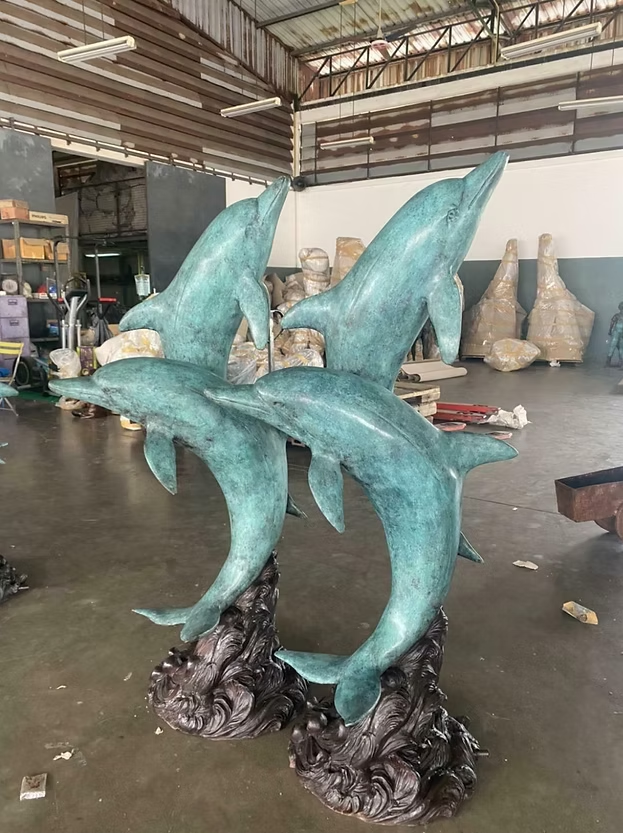
When a sacred space needs a focal point that feels both dignified and alive, we reach for bronze—because it holds detail, carries patina beautifully, and endures weather and time. Bronze Fountain Design No. 63 is our kind of work: wildlife rendered with care, and water treated as a living presence rather than decoration.
Craftsmanship and material
We cast this fountain in bronze using traditional foundry practice, shaping each element so the forms read clearly from every angle. Our artisans work from sculptural models through mould-making and into lost-wax casting, then refine the surfaces with finishing and polishing where the design calls for it. Finally, we develop the patina so the bronze settles into a rich, harmonious tone—depth where light touches, warmth where shadows gather.
Because fountains live with water, we pay attention to structural soundness and the integrity of every junction—where movement, weight, and long-term exposure meet. The result is a piece that feels refined in the hand and steady in the environment.
Religious symbolism in the language of nature
In sacred settings, nature is never “background.” It becomes a language of renewal, providence, and contemplation. This fountain’s theme—animals interacting with water—speaks to harmony: life drawn toward sustenance, and the steady invitation of a clean source. The dynamic forms create a sense of motion that can support prayerful stillness, giving the eye something gentle to follow while the heart rests.
We design these scenes to feel devotional without turning them into literal instruction. The symbolism is carried by rhythm: water as grace, wildlife as creation, and bronze as permanence.
Placement and use in sacred spaces
Bronze Fountain Design No. 63 is made to serve as a centerpiece—whether in a garden, courtyard, or public-facing sacred approach. In many of our commissions, fountains like this become a quiet meeting point: a place where visitors naturally slow down, where clergy and guests pause before entering a chapel or hall, and where the space gains a sense of welcome through sound and reflection.
We often recommend positioning it so sightlines open naturally—near a walkway, within a cloistered courtyard, or as the heart of a landscaped axis. If you’re integrating it into a larger landscape plan, our team can help you align the fountain’s visual weight with surrounding stonework, planting, and architectural lines.
- Courtyards and cloisters where a central focal point supports contemplation
- Garden approaches that benefit from reflective surfaces and gentle movement
- Public sacred spaces where durability and dignity matter
- Standalone centerpiece moments that anchor a landscape composition
Care, patina, and long-term preservation
Bronze is forgiving when it’s cared for with consistency. Our patina is designed to age with grace, but fountains still benefit from thoughtful maintenance—especially where water chemistry and seasonal exposure vary. In our studio practice, we advise owners to keep surfaces clean of heavy mineral buildup, monitor water flow and joints, and address any early signs of oxidation or surface change before they become stubborn.
For outdoor installations, we recommend seasonal checks and gentle cleaning methods that respect the patina. For indoor or sheltered environments, regular dusting and careful handling around splash zones help preserve the finish. If you ever need guidance, our artisans can recommend a maintenance approach suited to your setting.
Frequently asked questions
How do we choose the right bronze fountain sculpture for a church courtyard?
We start with sightlines and the way people move through the space. A fountain should become a natural pause point—visible from key approaches, but not overwhelming the architecture. We also consider how the sound and reflection will interact with nearby stone and planting. If you share your courtyard layout, we can guide you toward a placement that feels balanced and prayer-friendly.
Will the bronze patina look consistent over time in outdoor conditions?
Bronze patina is meant to evolve, and that’s part of its beauty. In our workshop, we finish with a patina that settles into a deep, elegant tone, then we advise on routine care to keep the surface healthy. With regular attention to water flow and mineral deposits, the finish typically ages in a controlled, dignified way rather than unpredictably.
Can our studio customize the size or finish for a specific sacred space?
Yes. We frequently tailor commissions to the environment—adjusting scale and selecting a finish direction that complements surrounding materials and lighting. Our goal is always harmony: the fountain should feel like it belongs to the architecture and landscape, not like it was dropped into the space. If you have reference photos or measurements, we’ll help you shape a fitting outcome.
What maintenance does a bronze fountain require for long-term reliability?
Most maintenance is practical and preventive: keeping surfaces clean of heavy mineral buildup, checking water flow, and monitoring joints and connections. We also recommend periodic inspections so small issues don’t become casting-related problems. Our artisans can advise on a care rhythm that matches your climate and water conditions, so the fountain stays both beautiful and dependable.
Is this fountain suitable for indoor installation as well?
Yes, fountains can be installed indoors when the space is designed for water features and splash management. In sheltered environments, bronze often retains its finish beautifully with routine cleaning and careful attention to humidity and water handling. We can help you think through placement so the fountain’s presence remains serene and the surface treatment stays protected.
Inquire about this sculpture
This story accompanies the sculpture Bronze Fountain Design No. 63 in our catalog.