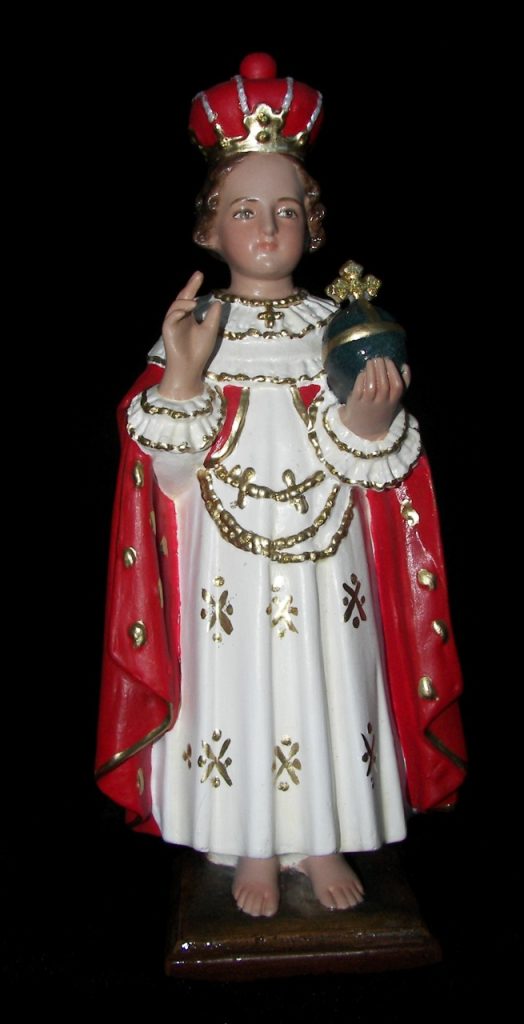
In our studio, we’ve learned that selecting a devotional sculpture is never only about beauty. It’s about how the piece will live with people: how it will be approached, how it will catch light, and how it will carry prayer over time. The Infant of Prague—especially in an 11″ scale—often becomes a daily companion: a small center of gravity for a home altar, a side chapel, or a quiet niche.
Craftsmanship/material
Every Infant of Prague we produce is shaped through the same disciplined path our Italian-trained artisans follow: careful modeling, precise mould work, and finishing that respects the figure’s tenderness and clarity. For this size, we design for intimate viewing—where the surface treatment matters as much as the form.
Most of our bronze work is finished to a devotional, lived-in character: a controlled patina and a refined surface that reads cleanly at close range. We also pay attention to the practical side of sacred objects—how the piece is mounted, how it sits on its base, and how the edges are finished so the sculpture feels secure and dignified in its setting.
Religious symbolism
The Infant of Prague holds a particular kind of tenderness in Christian devotion. We see it in the way people respond: the figure invites closeness, and the gesture of the Child becomes a focal point for trust and intercession. In a chapel, it helps create a visual “answer” to prayer—something the faithful can return to without strain.
When you choose an Infant of Prague for a specific space, we recommend thinking about how the symbolism will be read by those who visit. In an 11″ scale, the sculpture is often placed where the eye naturally lands—near a candle, a devotional book, or a place of kneeling—so the presence is felt, not merely seen.
Placement/use
For an 11″ Infant of Prague, placement is everything. This scale is ideal for intimate settings: a home altar, a chapel side niche, a lectern-adjacent devotional shelf, or a small table dedicated to prayer. We typically advise clients to place the sculpture where it will be approached regularly—because devotional art is meant to be used.
-
Line of sight: Position it at eye level when seated or standing in prayer. The figure should meet the gaze naturally.
-
Light: Choose a spot where the surface finish can breathe—soft, steady light helps the details read without glare.
-
Stability: Ensure the base sits on a firm surface, away from high-traffic bumps and drafts that can disturb candles or coverings.
-
Companions: If you’re building a devotional corner, keep the surrounding objects intentional—one or two elements that support prayer, not compete with it.
If you’re commissioning for a chapel, we can also help you think through the rhythm of the space—how the Infant of Prague will relate to nearby statuary, cruciform focal points, or the overall flow of the sanctuary.
Care
Devotional sculptures are meant to be touched by time, but they still deserve thoughtful care. For bronze works finished with patina, we recommend gentle, regular maintenance rather than aggressive cleaning.
-
Dusting: Use a soft, dry cloth or a very gentle brush to remove dust without rubbing hard.
-
Avoid harsh chemicals: Strong cleaners can disturb patina and surface tone.
-
Handling: If you need to move the piece, lift by the base or secure points—never by delicate protrusions.
-
Environment: Keep it away from constant moisture, direct rain exposure, or areas where smoke and oils build up quickly.
With proper care, the sculpture’s finish will continue to look dignified—its surface developing a calm, devotional character rather than looking “treated.”
FAQ
1) Is 11″ a good size for a home altar or chapel niche?
Yes. In our workshop, we find that 11″ works beautifully for intimate devotional use—close enough for details to be appreciated, yet substantial enough to feel present. It’s especially well-suited for shelves, side niches, and small prayer tables where the faithful can approach regularly. If your space is larger or meant for viewing from farther away, we can discuss a larger commission-scale option.
2) What finish should we choose so the sculpture looks devotional in our lighting?
We typically guide clients toward finishes that read clearly in real chapel or home light—where details remain legible without harsh glare. Our artisans aim for a patina character that feels warm and stable over time. If your space has strong directional lighting or reflective surfaces, tell us what you’re working with; we’ll help you choose a surface treatment that stays calm and coherent.
3) How do we place the Infant of Prague so it’s actually used for prayer?
We recommend placement that supports routine: a spot where people naturally look when they pray. For an 11″ sculpture, that often means eye-level when seated or standing, near a candle or devotional book, and on a stable surface away from foot traffic. The goal is simple—make the sculpture easy to approach, so devotion becomes habitual.
4) How should we clean and protect the bronze over the years?
Start with gentle dusting using a soft, dry cloth. Avoid abrasive pads and harsh chemical cleaners, which can disrupt patina and surface tone. If the piece is near candles, wipe carefully and periodically to prevent buildup. For most settings, careful handling and regular light maintenance are enough to keep the sculpture dignified and devotional.
5) Can our studio create a custom Infant of Prague for a specific space?
Yes. Our atelier frequently supports custom commissions, including adjustments that suit a chapel’s layout or a family’s devotional needs. If you’re working with a particular niche size, base requirement, or desired presence, we’ll help shape the commission so the sculpture feels integrated—proportions, mounting, and finishing all considered together.
Inquire about this sculpture
This story accompanies the sculpture Infant of Prague 11″ in our catalog.