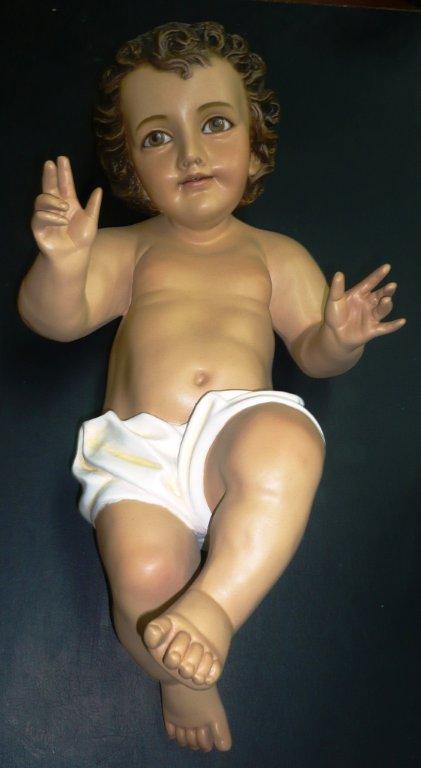
At our studio, we’ve learned that selecting a religious sculpture is always a practical decision—about sightlines, surface life, and how the piece will “behave” in a room. Baby Jesus #10 is made for exactly that kind of real-world devotion: serene, intimate, and composed in a classical sacred language that welcomes closeness.
In this guide, we’ll walk you through what to look for, what our artisans pay attention to in the making, and how to place and care for a Christ Child sculpture so it remains beautiful for years of kneeling, visiting, and remembering.
Craftsmanship and material: what to look for up close
Our artisans build sacred figures with a steady hand and a disciplined eye for proportion. With Baby Jesus #10, the sculptural focus is on calm presence—how the form holds together from a distance, and how it rewards you when you come nearer. We pay particular attention to the transitions: the way the body volumes soften, how the drapery and supporting elements settle, and how the face carries tenderness without losing structure.
Most importantly, we finish these pieces to respect the subject. In our workshop, surface treatment is never an afterthought. We aim for a finish that reads clearly in chapel lighting and still feels dignified under gallery illumination—so the sculpture doesn’t just look “finished,” it looks alive with reverence.
Religious symbolism: why the Christ Child matters
The Christ Child is not only an image of innocence; it’s a devotional statement. In Christian art, the Baby Jesus figure invites contemplation of Incarnation—the nearness of God made present in human form. That’s why the expression and the balance of the sculpture matter so much: they guide the viewer toward tenderness, trust, and quiet awe.
Baby Jesus #10 is designed to function as a focal point for devotion. Whether it’s part of a nativity arrangement, a dedicated chapel niche, or a private prayer corner, the sculpture’s calm clarity helps people slow down. In our experience, that’s what makes a sacred piece “work”: it supports prayer rather than competing with it.
Placement and use: where it will feel right
Choosing placement is where your space speaks back to the artwork. We recommend thinking first about how people will approach the sculpture—visitors should be able to see the face and overall form without strain, and the piece should not be visually swallowed by surrounding elements.
- Chapel settings: Place Baby Jesus #10 where it can become a natural pause point—near an altar pathway, in a side chapel, or within a dedicated devotional alcove.
- Gallery or home display: Choose a stable, well-lit location that avoids harsh glare and keeps the figure readable from the seating distance.
- Private prayer corners: Keep it at a viewing height that encourages stillness—close enough for tenderness, far enough for dignity.
If you’re coordinating with clergy or a designer, we can help you think through sightlines and lighting so the sculpture’s serenity is consistent throughout the day.
Care and longevity: keeping the surface dignified
Religious sculptures are meant to be lived with. Our approach to care is straightforward: protect the surface, keep it clean without abrasives, and avoid conditions that accelerate wear. In most interiors, gentle dusting and mindful handling preserve the sculpture’s finish and the clarity of its details.
- Dusting: Use a soft, dry cloth or a gentle dusting method to remove surface grit.
- Cleaning: Avoid harsh chemicals and abrasive materials; when in doubt, we recommend a conservative cleaning routine.
- Environment: Keep the piece away from excessive humidity, direct heat sources, and strong sunlight that can fatigue finishes over time.
- Handling: If relocation is needed, we advise careful support and stable transport to protect delicate details.
For long-term preservation, our studio can advise on a care plan that fits your installation conditions.
FAQ
1) Who is Baby Jesus #10 best suited for—churches, collectors, or both?
We see Baby Jesus #10 work beautifully for both devotional and collecting contexts. In chapels and prayer spaces, it becomes a quiet focal point that supports contemplation. In private collections, it offers a classical sacred presence with a tender emotional register. If you’re commissioning for a specific liturgical or interior design purpose, we’ll help align the placement and viewing experience with how your space is used.
2) How do we choose the right placement in a chapel or sanctuary?
Start with sightlines and the natural pause point of the room. We recommend placing the sculpture where the face and overall form can be seen comfortably from where people gather—without glare or visual clutter. Side chapels, devotional alcoves, and pathways near the main altar are often ideal. If you share your layout and lighting approach, our team can guide you toward a placement that feels intentional.
3) What kind of finish and surface care should we expect for a Christ Child sculpture?
Our artisans finish sacred sculptures with durability and visual clarity in mind, so the piece reads well under real lighting. For care, we advise gentle dusting and avoiding harsh cleaners or abrasives. Keep the sculpture away from excessive humidity, direct heat, and strong sun exposure that can stress finishes over time. If you need a maintenance routine for your environment, we’ll help you set one up.
4) Can this sculpture be integrated into a nativity display or seasonal devotional arrangement?
Yes—Baby Jesus figures are often chosen specifically because they anchor a nativity or seasonal devotional arrangement with tenderness and calm. The key is balance: ensure the sculpture’s scale and viewing height harmonize with surrounding pieces, and that lighting doesn’t wash out the face. We can advise on how to coordinate the display so the Christ Child remains the emotional center.
5) What should we ask before commissioning or purchasing for a specific space?
We recommend asking about installation context: sightlines, lighting, and how the sculpture will be approached by visitors. If you’re working with a designer or clergy team, share the intended location and how the space is used throughout the day. Our studio can also advise on practical display considerations and a care plan so the sculpture stays dignified for long-term devotion.
This story accompanies the sculpture Baby Jesus #10 in our catalog.